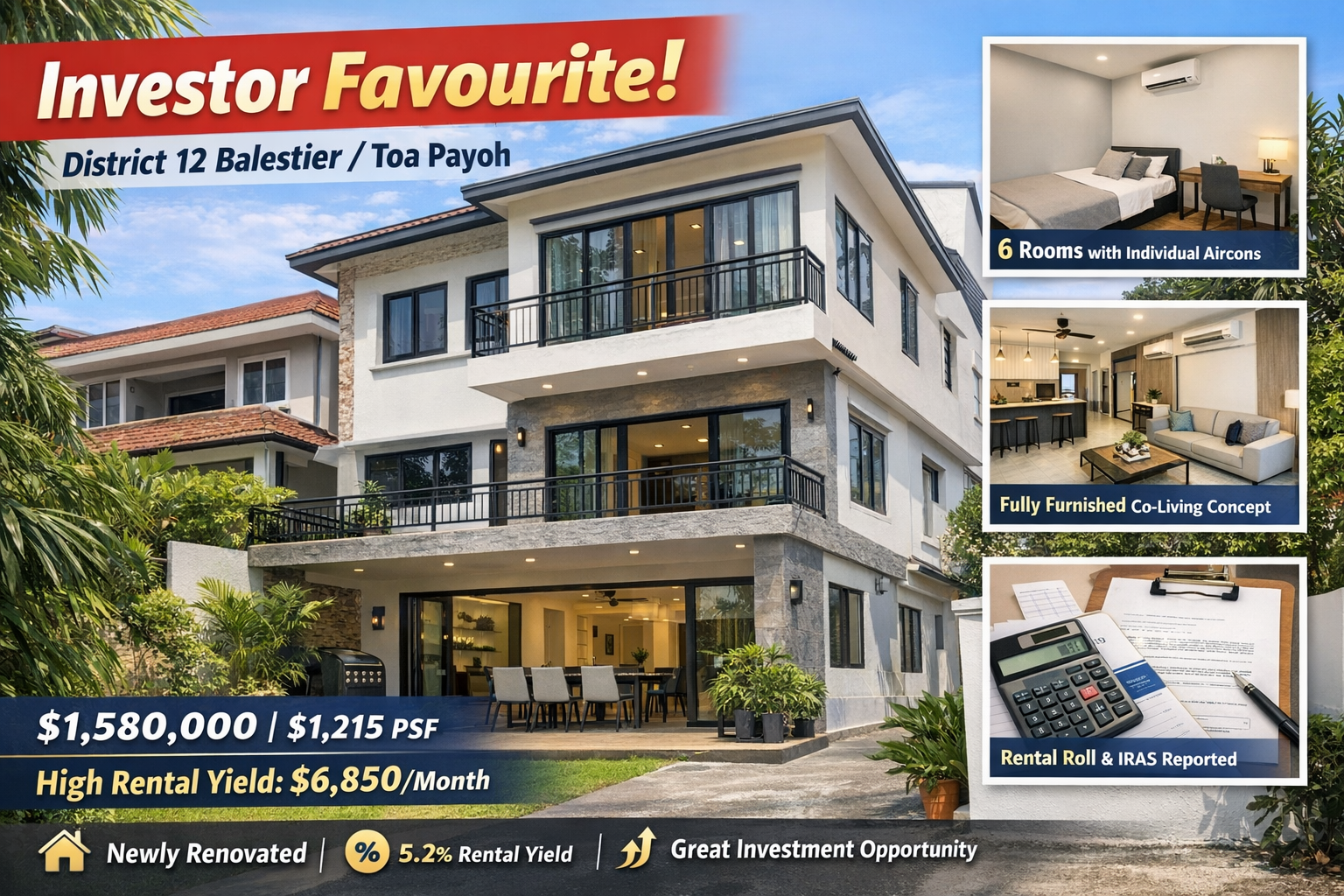
In today’s competitive Singapore property market, investors are increasingly seeking assets that combine high rental yield, strong capital appreciation, and stable tenant demand. Among the most sought-after opportunities are landed properties in city-fringe locations that offer both lifestyle appeal and robust financial returns. One standout opportunity currently capturing investor attention is a newly renovated landed property in District 12 Balestier / Toa Payoh, generating a remarkable monthly rental income of S$6,850.
Priced at S$1,580,000 or approximately S$1,215 per square foot, this property is widely regarded as an investor favourite, particularly due to its innovative co-living concept, strong rental track record, and excellent proximity to key MRT stations such as Boon Keng, Novena, and Toa Payoh. With six bedrooms, six individual air-conditioning units, modern fittings, and verified rental roll reported to IRAS, this property represents a turnkey investment opportunity in one of Singapore’s most resilient real estate segments.
This article explores in depth why this landed property is attracting strong market interest, how it aligns with modern rental trends, and why it stands out as a premium choice for both seasoned investors and first-time property buyers seeking consistent income and long-term growth.
Singapore Property Market Overview: Why Investors Still Choose Landed Homes
Singapore’s real estate market has long been recognized as one of the most stable and transparent in the world. Despite periodic cooling measures and evolving regulations, demand for well-located residential assets continues to rise, particularly in city-fringe districts that offer accessibility, lifestyle convenience, and rental resilience.
Among the various property types available, landed properties hold a unique position. While they account for a smaller percentage of overall housing stock compared to condominiums and HDB flats, landed homes are prized for their exclusivity, limited supply, and strong capital preservation characteristics.
For investors, landed properties present several strategic advantages:
Scarcity Value
Landed homes are finite in supply due to land constraints in Singapore. This scarcity often translates into better long-term price appreciation compared to mass-market condominiums.
Flexibility in Usage
Owners have greater freedom to renovate, reconfigure layouts, or implement innovative concepts such as co-living, multi-generational homes, or boutique rental properties.
Strong Rental Demand in Central Locations
Landed properties near MRT stations, hospitals, business hubs, and lifestyle amenities are especially attractive to professionals, expatriates, and long-term tenants seeking privacy and comfort.
Resilience Against Market Volatility
Historically, landed properties tend to hold value well during market corrections and often recover faster due to sustained underlying demand.
In this context, a landed home in District 12 that is already producing S$6,850 in monthly rental income stands out as a compelling opportunity that aligns with both short-term cash flow objectives and long-term wealth preservation strategies.
District 12 Balestier / Toa Payoh: A Strategic Investment Location
District 12, encompassing Balestier, Toa Payoh, and Novena, is widely regarded as one of Singapore’s most desirable city-fringe residential zones. It offers an ideal balance between centrality and livability, combining excellent connectivity, established infrastructure, mature amenities, and strong tenant demand.
Central Connectivity
Residents in District 12 enjoy direct access to multiple MRT lines, including:
Boon Keng MRT (NE9) on the North East Line
Novena MRT (NS20) on the North South Line
Toa Payoh MRT (NS19) on the North South Line
These transport nodes connect seamlessly to the Central Business District, Orchard Road, Marina Bay, and major employment clusters, making the area particularly appealing to working professionals, healthcare workers, students, and expatriates.
Established Amenities and Lifestyle Appeal
Balestier and Toa Payoh are well-known for their rich heritage, vibrant food scene, and community-oriented living environment. Residents enjoy easy access to:
Shopping malls such as Zhongshan Mall, Shaw Plaza, and Balestier Point
Renowned medical institutions including Tan Tock Seng Hospital and Novena Medical Hub
Reputable schools and educational institutions
Parks, sports complexes, and lifestyle amenities
These factors contribute to consistently high rental demand, especially for well-maintained homes that offer modern interiors and flexible living arrangements.
Strong Rental Market Fundamentals
District 12 benefits from its proximity to Novena, which is rapidly transforming into a major healthcare and medical research hub. This has resulted in increasing rental demand from medical professionals, researchers, and international talent seeking accommodation near their workplace.
As a result, properties that offer multiple rooms, individual privacy, and well-designed communal spaces are particularly well-positioned to capture strong and stable rental income. This is precisely where the featured landed property excels.
Property Overview: High Yield Landed Home at S$1,580,000
The featured landed property is priced at S$1,580,000, translating to approximately S$1,215 per square foot. This valuation is competitive when compared to nearby private condominiums and other landed homes in District 12, especially considering its:
Newly renovated condition
Strong rental income of S$6,850 per month
Proven tenancy track record
Fully furnished setup
Optimized layout for co-living
This combination makes the property highly attractive to both yield-focused investors and buyers seeking a ready-to-move-in asset without renovation downtime or uncertainty.
Key Property Highlights
Monthly rental income: S$6,850
Bedrooms: 6 rooms
Air-conditioning: 6 individual units
Renovation: Newly renovated with modern furniture and fittings
Rental records: Available for inspection and reported to IRAS
Investment concept: Co-living model
Location: District 12 Balestier / Toa Payoh
MRT access: Boon Keng, Novena, Toa Payoh
Each of these features contributes directly to the property’s strong appeal and income-generating potential.
Understanding the Co-Living Concept: Why It Works in Singapore
The rise of co-living has reshaped Singapore’s residential rental landscape over the past decade. Driven by demographic shifts, urbanization, affordability concerns, and lifestyle preferences, co-living has become one of the fastest-growing segments in the rental market.
What Is Co-Living?
Co-living refers to a residential model where tenants rent private bedrooms while sharing common areas such as kitchens, living rooms, and laundry spaces. Unlike traditional room rentals, modern co-living properties emphasize:
Thoughtful design
Fully furnished interiors
Flexible lease terms
Professional management
Community-oriented living
This model appeals strongly to:
Young professionals
Expatriates
Students
Short-to-mid-term residents
Digital nomads
Why Co-Living Generates Higher Rental Yield
Compared to renting out a whole unit to a single family, co-living properties typically generate:
Higher Gross Rental Income
By renting individual rooms separately, landlords can achieve higher total rental revenue compared to leasing the entire home as one unit.
Diversified Tenant Risk
Multiple tenants reduce dependency on a single renter, helping to stabilize cash flow even if one room becomes temporarily vacant.
Stronger Demand Pool
Co-living caters to a wide demographic, including those seeking affordability, flexibility, and lifestyle convenience.
Faster Turnover and Occupancy Rates
In central and city-fringe locations, well-designed co-living properties often enjoy near-full occupancy due to consistent tenant demand.
How This Property Excels in the Co-Living Market
This District 12 landed home has been intentionally configured to maximize co-living appeal:
Six private bedrooms, allowing individual tenancy
Six separate air-conditioning units, ensuring comfort and privacy
Modern renovation and furnishings, increasing perceived value and rental rates
Efficient layout, balancing communal spaces and private zones
Verified rental records, providing investors with transparency and confidence
With a current rental income of S$6,850 per month, the property demonstrates how co-living can significantly enhance yield while maintaining long-term sustainability.
Financial Performance: High Rental Yield and Strong Investment Metrics
From an investment perspective, rental yield remains one of the most critical indicators of property performance. In Singapore’s private residential market, typical gross rental yields range between 2% to 4%, depending on property type, location, and market conditions. However, well-optimized co-living properties in city-fringe locations can achieve yields exceeding these averages.
Gross Rental Yield Analysis
At a purchase price of S$1,580,000 and a monthly rental income of S$6,850, the estimated annual rental income is:
S$6,850 × 12 = S$82,200 per year
Gross rental yield:
S$82,200 ÷ S$1,580,000 ≈ 5.2%
This yield is highly competitive in the Singapore property market, especially for a landed asset in a central location. Such performance places this property among the top tier of income-generating residential investments.
Net Yield and Cash Flow Potential
After accounting for maintenance, property tax, management fees, and vacancy allowance, investors can still expect strong net cash flow, particularly due to:
Minimal renovation costs, as the unit is newly upgraded
High-quality fittings that reduce short-term maintenance needs
Proven rental demand supported by existing tenancy records
Optimized room configuration that enhances rental efficiency
For investors seeking passive income, this property offers a rare combination of stable cash flow, high yield, and capital preservation.
Renovation and Interior Design: Creating Value Through Modern Living
One of the defining features of this property is its newly renovated condition, complete with modern furniture, fittings, and thoughtful interior design. In today’s competitive rental market, design quality plays a crucial role in attracting tenants and commanding premium rents.
Why Renovation Matters in Rental Properties
Tenants today are increasingly discerning. They expect:
Contemporary aesthetics
Functional layouts
Well-maintained fixtures
Clean and comfortable living environments
Turnkey move-in conditions
Properties that fail to meet these expectations often struggle with longer vacancy periods and downward pressure on rental prices.
How This Property Stands Out
This District 12 landed home has been renovated to meet modern living standards, featuring:
Stylish furniture that enhances comfort and usability
Updated lighting fixtures that improve ambiance
Quality fittings that increase durability and tenant satisfaction
Neutral color palettes that appeal to a broad tenant base
Thoughtfully designed communal spaces that support co-living interaction
These design upgrades not only improve rental attractiveness but also support higher achievable rents, thereby enhancing overall investment returns.
Rental Roll Transparency and IRAS Reporting: Confidence for Investors
A key advantage of this investment opportunity is the availability of a full rental roll and tenant list, which have been reported to IRAS. This level of transparency is particularly valuable in Singapore’s property market, where investors increasingly prioritize verified income streams and compliance with regulatory standards.
Why Rental Roll Matters
A rental roll provides:
Details of existing tenants
Rental rates per room
Lease expiry dates
Occupancy history
Payment records
This allows buyers to assess:
Stability of rental income
Tenant diversification
Vacancy risk
Lease rollover timelines
IRAS Reporting: A Mark of Compliance and Credibility
Rental income reported to IRAS confirms that the property is operating within Singapore’s legal framework and tax regulations. For investors, this:
Reduces compliance risk
Enhances financing eligibility
Improves transaction transparency
Builds confidence in projected cash flow
Together, these factors make this landed home a low-risk, high-confidence investment, especially for buyers seeking immediate income without operational uncertainty.
Why District 12 Appeals to Tenants: Lifestyle, Convenience, and Connectivity
Tenant demand is the foundation of any successful rental investment. District 12’s appeal lies not only in its central location but also in its lifestyle offerings, accessibility, and community charm.
Proximity to Employment Hubs
Residents enjoy short commuting times to:
Central Business District
Orchard Road
Novena Medical Hub
Toa Payoh Industrial Areas
Thomson and Bishan business clusters
This convenience is especially valuable to professionals seeking to reduce travel time while maintaining access to urban amenities.
Healthcare and Education Proximity
District 12 is home to major healthcare institutions such as Tan Tock Seng Hospital and the Novena Medical Campus, making it highly attractive to:
Doctors
Nurses
Researchers
Medical students
Visiting professionals
Additionally, reputable schools and training institutions in the surrounding areas support steady demand from families and students alike.
Vibrant Food and Lifestyle Scene
Balestier is known for its heritage eateries, cafes, and bakeries, while Toa Payoh offers hawker centres, shopping malls, and community facilities. These amenities enhance quality of life and contribute to long-term tenant retention.
Together, these lifestyle factors underpin sustained rental demand, supporting both high occupancy rates and stable rental income over time.
Capital Appreciation Potential: Beyond Rental Yield
While rental yield is a key metric, long-term investors also prioritize capital appreciation, which represents the growth in property value over time. Landed properties in city-fringe districts like Balestier and Toa Payoh have historically demonstrated strong appreciation due to:
Limited supply of landed homes
Growing urban population
Infrastructure improvements
Rising income levels
Lifestyle-driven demand
Why Landed Homes Outperform Over the Long Term
Unlike condominiums, which face ongoing supply from new launches, landed homes are constrained by zoning restrictions and land scarcity. As Singapore continues to urbanize and densify, landed properties become increasingly rare, enhancing their long-term value.
In particular, landed homes located near MRT stations and key amenities enjoy premium pricing due to:
Accessibility
Lifestyle convenience
Rental resilience
Redevelopment potential
This District 12 property benefits from all these factors, positioning it well for both income generation today and capital growth tomorrow.
Strategic Advantages of Buying a Turnkey Investment Property
Many investors underestimate the value of purchasing a turnkey investment property that is already renovated, furnished, and generating income. In contrast to properties requiring renovation or tenant sourcing, turnkey assets offer immediate returns and reduced execution risk.
Benefits of Turnkey Properties
Immediate Cash Flow
Rental income begins from day one, improving investment efficiency and reducing holding costs.
Lower Execution Risk
Renovation delays, cost overruns, and design misalignment are eliminated.
Market-Tested Rental Strategy
Existing rental performance validates the property’s income potential.
Time Savings
Investors can focus on portfolio growth rather than day-to-day property setup.
Financing Advantages
Banks may view income-producing assets more favorably due to predictable cash flow.
This District 12 landed home exemplifies the benefits of turnkey investing, offering buyers a rare opportunity to acquire a fully optimized rental asset with verified performance metrics.
Co-Living as a Future-Proof Investment Strategy
As Singapore’s urban population continues to grow and housing preferences evolve, co-living is expected to remain a key driver of rental demand. Several macro trends support this outlook:
Urbanization and Lifestyle Shifts
More people are choosing to live closer to city centres, employment hubs, and social amenities. Co-living provides an affordable and flexible alternative to traditional private rentals, especially in high-demand districts.
Rising Property Prices and Rental Costs
As housing costs increase, renters are increasingly seeking shared living arrangements that offer better value while maintaining comfort and privacy.
Growth of Flexible Work and Mobility
With the rise of hybrid work, contract-based employment, and global mobility, many tenants prefer flexible lease terms and fully furnished homes that support shorter stays.
Social Connectivity and Community Living
Co-living appeals to individuals seeking social interaction, community experiences, and lifestyle-driven housing solutions rather than isolated living.
This property’s six-room configuration and modern renovation align perfectly with these trends, positioning it as a future-proof investment asset in Singapore’s evolving rental market.
Comparing This Property with Condominiums and Apartments
Investors often weigh landed properties against condominiums and apartments when evaluating investment opportunities. While each asset class has its merits, this District 12 landed home offers several advantages:
Higher Yield Potential
Co-living landed homes typically outperform condominiums in rental yield due to room-by-room leasing and higher occupancy flexibility.
Greater Control Over Renovation and Layout
Unlike strata-titled units, landed properties allow owners to redesign layouts more freely, optimizing rental efficiency and tenant appeal.
Scarcity Value and Capital Preservation
Landed homes benefit from long-term scarcity, supporting stronger capital appreciation compared to high-density developments.
Lower Competition from New Supply
Condominiums face competition from new launches and resale inventory, whereas landed homes are less susceptible to oversupply.
While condominiums offer facilities such as pools and gyms, this property’s central location, co-living design, and high rental income more than compensate for such amenities from an investment perspective.
Tenant Profile: Who Rents in This Property?
Understanding tenant demographics is essential for evaluating rental stability and income sustainability. This District 12 landed home attracts a diverse and reliable tenant base, including:
Young professionals working in CBD, Novena, and surrounding districts
Medical professionals employed at nearby hospitals and clinics
International executives and expatriates seeking central accommodation
Students and researchers associated with educational institutions
Contract workers and project-based professionals
These tenants typically value:
Proximity to MRT stations
Fully furnished, move-in-ready rooms
Flexible lease terms
Comfortable and well-maintained living environments
Privacy combined with communal interaction
The property’s six-room co-living layout, modern furnishings, and central location make it ideally suited to meet these preferences, ensuring sustained occupancy and stable rental income.
Risk Management: Mitigating Common Investment Challenges
Every investment carries risk, but strategic planning and asset selection can significantly mitigate potential challenges. This property offers several built-in risk management advantages:
Vacancy Risk Mitigation
With six individually rented rooms, income diversification reduces reliance on a single te